
Blog
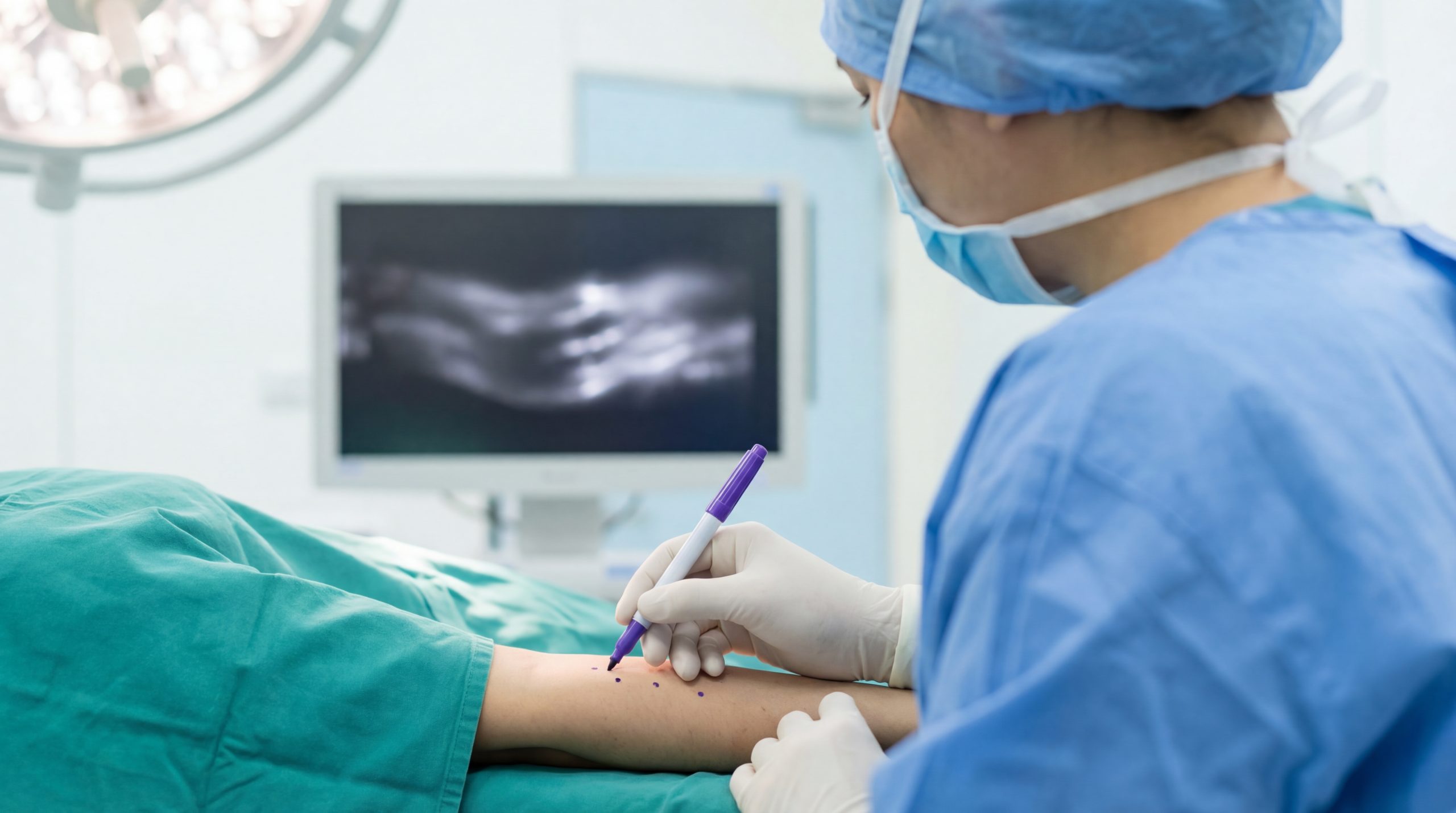
Author: Mr Chad Chang FRCS(Plast), Consultant Plastic Surgeon
Review Status: Peer-reviewed by Mr John Henton FRCS(Plast), Consultant Plastic Surgeon
Published: 29 March 2026
Quick Summary: Modern lymphoedema surgery has evolved from a “last resort” into a proactive, restorative intervention. Specifically, by using real-time ICG Lymphography to map functional pathways, surgeons can now target specific stages of failure with a precise arsenal: LVA, VLNT, or SAPL. Consequently, this evidence-led approach moves beyond simple symptom management to actively repair the system, reducing infection risk and restoring long-term quality of life.
Beyond "Managing" and Toward "Restoring"
For many living with lymphoedema, the daily routine of skin care, compression garments, vibration plates, and Manual Lymphatic Drainage (MLD) can feel like a full-time job. While these therapies are the foundation of lymphoedema care, they often feel like they are only holding the line – halting progression rather than addressing the cause.
If, however, you have reached a plateau where your limb feels heavy, tight, or is prone to infections despite your best efforts, it is important to know that the surgical “last resort” is a thing of the past. Instead, modern surgical advancements allow us to move from simply “managing” your condition to actively addressing the cause of your symptoms.
How Has Lymphoedema Surgery Evolved?
Historically, surgery was considered a “last resort” involving radical procedures like the Charles Procedure. Although this technique effectively reduced the weight of a limb by removing diseased tissue, it was often disfiguring and failed to address the underlying lymphatic failure.
Subsequently, the 1970s and 80s introduced early modern microsurgery. During this period, surgeons first attempted to bypass blockages by connecting larger lymphatic trunks to veins; nevertheless, the instruments of the time were relatively coarse, and these early connections often struggled to remain open long-term.
Treatment options changed dramatically in the 1990s with Vascularised Lymph Node Transfer (VLNT). For the first time, surgeons weren’t just removing bulky tissues; they were transplanting living “biological pumps”—healthy lymph nodes that act as sponges to soak up fluid and release growth factors to encourage the body to grow its own new drainage channels.
Around the same time, our improved understanding of how lymphoedema transforms tissue led to Suction-Assisted Protein Lipectomy (SAPL). Pioneered by Professor Brorson, this specialised, tissue-sparing technique safely removes solid fat and scar tissue without the extensive scarring associated with the Charles Procedure.
Today, in the Supermicrosurgery Era, we work on vessels smaller than 0.8 mm using magnification and sutures smaller than an eyelash. Through Lymphaticovenous Anastomosis (LVA), we can “replumb” the system at a microscopic level. Ultimately, we are no longer just managing a condition; we are using 50 years of surgical progress to repair, rebuild, and restore your quality of life.
A Comprehensive Arsenal for Every Stage
The evolution from radical excision to super-precision means that, for the first time, we possess a complete surgical arsenal. Whether you are in the early, “pitting” phase where LVA can bypass obstructions, or in a more advanced stage requiring a biological boost from VLNT, there is a path forward. Furthermore, even for those with chronic, solid swelling, SAPL offers a proven method to reset the limb’s structure and restore mobility. In short, we are no longer limited by the tools of the past; we now have the precision to rebuild your lymphatic system and significantly improve your quality of life, regardless of where you are in your journey.
What are My Surgical Options Based on My Stage of Disease?
Patients often ask, “Am I a candidate?” The answer depends on your specific stage, which we map using ICG Lymphography, a way to see your lymphatic system in real-time.
1. Early-Stage Lymphoedema
If your limb is still soft and “pitting,” we can often perform a Lymphaticovenous Anastomosis (LVA). Specifically, by creating a “bypass” or shortcut between the blocked lymphatic vessels and small nearby veins, we reduce the internal backpressure. Consequently, this diversion allows the system to drain more effectively, making the limb feel lighter and softer. Crucially, once this bypass is in place, conservative treatments like MLD and compression become more effective because they are no longer fighting against a complete blockage.
2. Established, Moderate Lymphoedema
As lymphoedema becomes established, the limb may start to lose its pitting ability. This is a transitional stage where some vessels still function, but others have failed, and the stagnant fluid is beginning to transform into solid fatty tissue. By this stage, Vascularised Lymph Node Transfer (VLNT) may be considered. By transplanting healthy, living lymph nodes into the affected area, we introduce a “biological pump” that absorbs excess lymph and releases growth factors to encourage lymphangiogenesis—the growth of your body’s own new drainage channels.
Because this is often a “mixed” stage, we may also consider a combined, staged approach, using LVA to address the stagnant fluid, followed up Suction-Assisted Protein Lipectomy (SAPL) to address the remaining solid tissue left behind.
3. Lymphoedema with Tissue Fibrosis
When lymphoedema reaches an advanced stage, the stagnant, protein-rich fluid eventually transforms into solid fibro-fatty tissue. At this point, LVA or VLNT cannot reduce the physical size of the limb because the swelling is no longer entirely fluid-based. Therefore, Suction-Assisted Protein Lipectomy (SAPL) is a specialised, tissue-sparing technique used to remove this solid fibrotic fatty tissue and return the limb to a near-normal volume. While this reset dramatically improves mobility and comfort, it requires a lifelong commitment of compression to ensure the results are maintained, and the swelling does not return.
The Evidence: What Does the Research Say?
Surgery is not merely a cosmetic choice but a reconstructive intervention aimed at improving function and long-term health. Here we summarises the outcomes supported by current international research.
Cellulitis Reduction
| Procedure | Clinical Findings & Evidence Summary | References |
|---|---|---|
| Surgery vs. Conservative (LVA, VLNT, SAPL) | A meta-analysis of surgical versus non-surgical cohorts demonstrated an 85.4% reduction in annual cellulitis frequency following surgery. Conversely, conservative management alone saw a 27.0% increase over the same period. | Shimbo K, Aoki Y. (2026). J Reconstr Microsurg. |
| LVA & VLNT (Lower Extremity) | A systematic review and meta-analysis of 648 cases across 23 studies found physiological surgical interventions resulted in a reduction of 1.13 to 2.43 cellulitis events per year. | Jungbauer WN, et al. (2025). Ann Plast Surg. |
| LVA | A retrospective review of 95 patients demonstrated a reduction in mean cellulitis episodes from 1.46 to 0.18 per year post-operatively, equating to an 87.7% reduction in frequency. | Mihara M, et al. (2014). BJS. |
| LVA vs. Conservative | A multicentre RCT confirmed that LVA combined with conservative therapy is significantly more effective at preventing cellulitis than conservative therapy alone. | Mihara M, et al. (2023). BJS. |
| LVA | A 2026 review reports a decrease of approximately 1.9 cellulitis episodes per year following LVA for breast cancer-related lymphoedema. | Lee CJ, et al. (2026). Front Surg. |
Volume Normalisation
| Procedure | Clinical Findings & Evidence Summary | References |
|---|---|---|
| SAPL | Long-term (15-year) follow-up demonstrates complete reduction of excess limb volume without recurrence in patients with chronic, non-pitting lymphoedema, contingent on continuous 24-hour compression. | Brorson H. (2016). J Reconstr Microsurg. |
| Combined Approach (SAPL vs SAPL + VLNT/LVA) | A systematic review (n=2,334) found that standalone liposuction reduced excess volume by 99.74%, while combining liposuction with LVA or VLNT achieved an 87.31% reduction but significantly decreased compression dependence. | |
| LVA | A prospective analysis of 100 cases showed a 61% reduction in excess volume at 12 months for Stage I/II patients, compared to a 17% reduction for Stage III/IV patients, confirming the importance of early intervention. | Chang DW, et al. (2013). PRS. |
| VLNT | VLNT achieves an average 42.7% reduction in limb circumference for upper extremities, compared to a 22.0% reduction for lower extremities. | Jungbauer WN, et al. (2025). Ann Plast Surg. |
| VLNT (vs. Conservative) | Combining VLNT with conservative therapy yielded a 57% mean volume reduction, significantly outperforming conservative therapy alone (18%). | Dionyssiou D, et al. (2016). Breast Cancer Res Treat. |
| LVA & VLNT | In upper extremity lymphoedema, physiological surgery achieves an average volume reduction ranging from 29.4% to 41.7%. For lower extremity cases, average reductions range from 31.9% to 39.5%. | Hahn S, et al. (2025). Microsurgery. |
| LVA | A 2026 review reports average excess limb volume reductions of 30% to 35% following LVA for breast cancer-related lymphoedema. | Lee CJ, et al. (2026). Front Surg. |
Quality of Life, Autonomy & Safety
| Clinical Goal | Clinical Findings & Evidence Summary | References |
|---|---|---|
| Functional Autonomy (LVA) | Prospective trials indicate that 43.0% to 46.3% of patients were able to completely discontinue or significantly reduce their use of compression garments at the two-year follow-up. | Brown et al. (2025).Breast Cancer Res Treat. Lee CJ, et al. (2026). Front Surg. |
| Quality of Life (All forms lymphoedema surgery) | A systematic review of 4,692 patients across 74 studies demonstrated significant improvements in patient-reported Quality of Life (QoL). LLIS scores improved by an average of 12.5 points. | Zurfluh C, et al. (2025). JPRAS. |
| Quality of Life (VLNT) | Meta-analysis of VLNT outcomes demonstrates a statistically significant +4.26-point improvement in the overall domain of lymphoedema-specific quality of life scales (LYMQOL). | Ward J, et al. (2021). Eur J Cancer. |
| Quality of Life (SAPL) | Patients undergoing SAPL report significant, sustained improvements in physical functioning, bodily pain, and vitality domains on validated scales (SF-36). | Hoffner M, et al. (2017). PRS Glob Open. |
| Functional Autonomy (LVA) | A 6-month interim analysis of an RCT demonstrated that 41% of LVA patients were able to partially or completely discontinue compression garments, compared to 0% in the conservative therapy group. | Jonis YMJ, et al. (2024). Sci Rep. |
Addressing Your Concerns: Is Surgery Right for You?
It is important to understand that surgery is not a “magic wand” designed to replace your therapist. Instead, we view it as a force multiplier—a clinical tool intended to make manual therapy and compression more effective. The most successful outcomes are achieved when we work in tandem with your existing care team. This collaboration ensures a seamless transition through three critical phases:
- Pre-operative Optimisation: We work with your therapist to ensure your limb is at its “driest” possible baseline through Complete Decongestive Therapy (CDT) before any incision is made.
- Tailored Mapping: We use ICG Lymphography to distinguish between Secondary Lymphoedema (site-specific damage, such as after cancer surgery) and Primary Lymphoedema (a global malformation of the vessels). This diagnostic clarity tells us exactly how and where to target our surgical intervention.
- Post-operative Care: We coordinate your rehabilitation with your therapist to protect and support the newly created drainage pathways as they begin to function.
Addressing Your Concerns: Is Surgery Right for You?
When considering surgery, it is natural to feel a mix of hope and hesitation. These are the questions we address most frequently during a first consultation.
"Will the surgery be painful?"
Modern lymphatic surgery utilises minimally invasive microsurgical techniques. For LVA, the procedure is “superficial,” meaning we operate just beneath the skin. Similar to having a mole removed, most patients experience minimal discomfort and return to light activities within days.
While SAPL is a more significant procedure involving bruising and soreness similar to a deep ache, this is managed effectively with standard pain relief. Ultimately, most patients find that temporary post-operative discomfort is a small price to pay for relief from the chronic, heavy aching they have lived with for years.
"Is it worth it?"
Because lymphoedema is a chronic condition, we measure “worth” through three key clinical outcomes:
- Infection Control: For those suffering from recurrent cellulitis, surgery can be life-changing. Research consistently shows a significant reduction in infection rates following surgery, leading to fewer hospital admissions and less reliance on antibiotics.
- Volume and Weight: If the main struggle is the physical weight of the limb, SAPL is the gold standard with almost complete reduction in excess volume, allowing patients to “get their limb back.”
- The Burden of Care: While surgery does not mean discarding compression garments entirely, many patients find their limb becomes much easier to manage, softer to the touch, and less reactive to heat or activity.
"Am I too far gone for surgery?"
A common misconception is that modern lymphoedema surgery is only for “mild” cases. In reality, we have surgical strategies for almost every stage of the disease. Through ICG Mapping, we can identify a surgical path for almost any stage; the goal simply shifts from repairing flow to restoring structure.
- For Early to Established Stages: If your limb still has “pitting” potential and your ICG scan shows functional vessels, we focus on LVA or VLNT to restore the physiological drainage.
- For Advanced Stages: If the tissue has become solid or fibrotic, we use SAPL to remove the accumulated metabolic waste.
You are rarely “too far gone” for a surgical improvement; the objective of the “Arsenal” is to ensure that even patients with advanced disease can achieve a lighter, more manageable limb and a significant reduction in infection risk.
"What are the risks?"
No surgery is without risk, but supermicrosurgery is remarkably safe. The primary risks include standard surgical concerns such as infection or delayed healing. In the case of VLNT, there is a small risk to the donor site. We discuss these in detail during your mapping session to ensure the potential benefits significantly outweigh the risks for your specific case.
"Will I ever be cured?"
We prefer the term “restoration” over “cure.” Lymphoedema is a chronic, long-term condition. While surgeries are performed to remove the bulk or restore flow, the underlying physiological tendency for the system to struggle remains.
Think of it like a hip replacement for osteoarthritis: the surgery removes the source of the pain and restores mobility, but it does not “cure” the arthritis itself. Similarly, a heart bypass restores blood flow to the heart and can save a patient’s life, but it is still important to look after your long-term health after surgery. Surgery is a powerful tool to reset your baseline and make the condition significantly easier to manage, but it works best as part of a lifelong commitment to your lymphatic health.
Why the Specialist Matters: Choosing Your Surgeon
Because the lymphatic system is so delicate, the margin for error is exceptionally small. It is vital to seek a specialist service that treats lymphoedema as a dedicated discipline, not an “add-on” service.
- Integrated ICG Mapping: A specialist should never operate “blind.” Real-time ICG mapping is the gold standard for ensuring that every treatment is appropriate and targeted with precision.
- Supermicrosurgery Expertise: Operating on <0.8 mm vessels require specific training and ultra-high-power magnification that standard microsurgeons may not possess.
- Lymph Sparing Protocol: SAPL is not standard cosmetic liposuction. It requires a detailed understanding of lymphatic pathways and a dedicated treatment protocol, including circumferential clearance and a lifelong compression plan, to be safe and effective.
If you would like to discuss your specific symptoms or arrange an ICG Lymphography assessment to map your drainage, please contact Great North Lymphatic Centre (GNLC), to schedule a consultation.
Disclaimer: This content is for educational purposes only and does not constitute personal medical advice. Content written by Mr Chad Chang and peer-reviewed by Mr John Henton.