
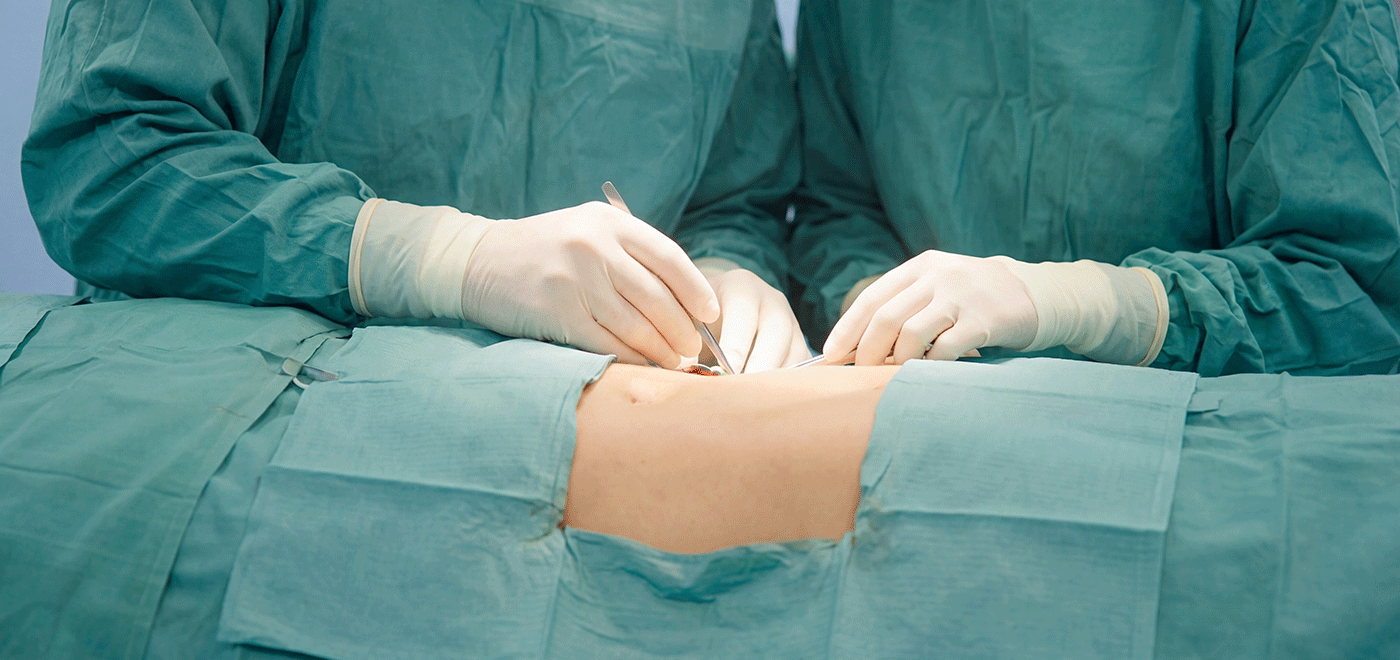
Vascularised Lymph Node Transfer overview
Vascularised lymph node transfer (VLNT) is a form of reconstructive lymphoedema surgery and microsurgery. In VLNT, we transplant a small flap of tissue that contains healthy lymph nodes, together with its own artery and vein, from one part of the body (the donor site) to the area affected by lymphoedema (the recipient site). Under the microscope we join the flap vessels to local blood vessels so the tissue survives in its new position.
Over time, VLNT surgery for lymphoedema aims to improve lymph drainage, soften tissues, reduce limb volume, and lower the risk of cellulitis.
At a Glance
- Aim: Transplant healthy lymph nodes with their blood supply to support lymph drainage.
- Best suited to: Moderate to advanced lymphoedema with few usable lymphatic channels on ICG and ongoing symptoms despite structured conservative care.
- Anaesthesia: General anaesthetic.
- Stay: Usually several days in hospital for flap monitoring and early recovery.
- Scars: A donor-site scar plus a recipient-site scar.
Results: Often gradual over months; effects vary between individuals.
About VLNT
01How does VLNT work?
VLNT adds a living flap of tissue containing lymph nodes and lymphatic vessels to the swollen region. The flap can:
- Act as a “sponge and pump”: lymph from nearby tissues can drain into the transplanted nodes and then into the flap veins, which return the fluid to the bloodstream.
- Provide a low-pressure sink: the new venous outflow acts as a drainage route for fluid in a congested area.
- Support new lymphatic vessel generation: In some patients, new lymphatic connections seem to form between the flap and surrounding tissues over time. This varies between individuals and does not occur in everyone.
As these processes mature over months, VLNT may:
- Reduce frequency and severity of cellulitis episodes.
- Improve tissue softness, comfort and limb shape.
- Reduce limb volume in selected cases.
Compression, skin care, and lymphoedema therapy usually continue during this period. VLNT rarely removes the need for self-care, but it may make control easier.
02Who might VLNT help?
VLNT can help in primary lymphoedema and secondary lymphoedema after cancer treatment or other surgery.
We consider VLNT when:
- ICG lymphography shows few or no usable superficial lymphatic vessels in the affected area.
- Swelling, heaviness, infections or functional problems continue despite good compression and conservative care.
- LVA alone is unlikely to provide enough benefit because of advanced or long-standing disease.
- You are medically fit for microvascular surgery and an inpatient stay.
- Suitable donor lymph node basins are available on imaging and clinical assessment.
It may not suit people with:
- Significant medical problems that make longer operations or general anaesthesia unsafe.
- Very limited donor-site options because of previous surgery, vascular disease or scarring
03Donor sites and safety
We can take lymph nodes flaps from various sites, but typically from inside the abdomen, the groin, or from the base of the neck. We plan donor sites to include a reliable group of lymph nodes and blood vessels while keeping the risk of new lymphoedema as low as we reasonably can.
Donor-site lymphoedema is a recognised risk with any lymph node harvest. While we plan to minimise this risk, it cannot be fully risk-free. The decision on donor-site is made based on a balance between expected benefit and risk, your anatomy, scar position and your preferences.
04Combining VLNT with other treatments
Many people considering lymphoedema surgery have a mixed pattern of disease:
- Some regions retain usable lymphatic vessels and respond to LVA.
- Other regions show severe dermal backflow on ICG, with little or no salvageable lymphatic flow.
In these situations, we may combine LVA and VLNT in a staged or single sitting:
- LVA treats fluid-predominant lymphoedema where salvageable lymphatic vessels remain.
- VLNT targets more advanced areas of lymphoedema where native lymphatics are severely compromised.
VLNT can also sit alongside liposuction or selective debulking when solid tissue change dominates. We decide sequencing based on your ICG pattern, symptoms and overall health.
05Benefits and limits
Potential Benefits
VLNT aims to restore or support lymphatic function rather than simply remove tissue. For suitable patients, it may:
- Gradually soften firm, fibrotic tissues and reduce tightness.
- Lower the frequency and severity of cellulitis episodes and related hospital admissions.
- Improve limb shape and comfort, which can make compression easier to tolerate.
- Offer an option when LVA is unsuitable because of severely damaged or absent lymphatics.
Limits
VLNT is a more involved procedure than LVA and has clear limits:
- Progress is gradual and varies between individuals. Some people notice marked benefit; others notice more modest change.
- Donor-site lymphoedema is a recognised risk, along with scarring, contour change, and local discomfort.
- VLNT requires a longer operation, several days in the hospital, and a period of activity restriction while the flap settles.
- You still need compression, skincare, and self-management; VLNT supports these measures, but it does not replace them.
What to expect
01On the day of surgery
Most of the practical steps on the day of surgery are the same for all procedures. These are described on our Patient Information page under “On the day of your surgery”.
For VLNT, the surgery usually takes several hours under general anaesthesia. After surgery, you wake in the recovery area, then move to a ward area where we can monitor the flap and your overall recovery closely. You usually stay in the hospital for several days so we can monitor the flap, manage pain, and support early mobilisation.
02After surgery
- We usually use dissolving stitches; if we use removable stitches we explain when and where to remove them.
- We show you how to look after the wounds and which changes should prompt you to contact us.
In the early phase:
- We limit large movements around the operation sites to protect the flap and reduce strain.
- We encourage a gentle return to normal movement to reduce stiffness and clot risk.
- We usually avoid strong compression directly over the flap and may adjust compression on the rest of the limb.
Many people resume usual daily activities and return to work between four and six weeks after surgery. Exact timelines depend on the limb treated, the donor site, and the type of work you do.
03Follow-up, timelines and risks
We usually see you for an initial wound review with regular further visits to review early outcomes on an individual basis. At these visits, we assess wound healing, donor-site comfort, limb measurements, symptoms, and cellulitis history, and we adjust your compression and self-care plan as needed.
VLNT is a form of physiological lymphatic reconstruction: a procedure that aims to restore or support lymphatic function. It can be reasonably involved, and it carries specific risks as well as the general risks of surgery and anaesthesia. In addition to general surgical risks, VLNT can have procedure-specific complications:
- Partial or total flap loss, which may require further surgery.
- Donor-site lymphoedema: swelling in the area that supplied the lymph nodes.
We aim to minimise these risks through careful planning, donor-site selection and intra-operative monitoring, but we cannot remove them completely. During your consultation we discuss these risks in detail and explain our strategies to reduce them, so that you can make an informed decision.
Common questions
01Where will the donor scar be?
We decide the donor site based on your anatomy, general health, and current evidence. Common donor areas in VLNT include inside your abdomen (omentum), lower abdomen/groin, supraclavicular area or around the armpit. We aim to include a reliable group of lymph nodes and blood vessels while reducing the chance of causing new lymphoedema in a healthy region.
02Will I have a drain and for how long?
Most patients have one or more drains at the donor site, the recipient site, or both. Drains remove blood and lymphatic fluid that can collect after surgery and help protect the flap. We remove them when drainage falls to a low, safe level and the flap remains stable. For many people this takes a few days, but the exact timing varies between individuals and between donor sites.
03How long will I stay in hospital?
VLNT usually needs a stay of several days. In the early phase we focus on flap monitoring, pain control, and getting your up and moving safely. Once the flap is stable, you pain is controlled on tablets and you feel confident walking, we plan discharge.
04When can I start using the limb fully?
We encourage gentle use and walking early, often from the first or second day, to reduce stiffness and clot risk. At first we avoid heavy lifting or strenuous activity. You then build up activity gradually over several weeks as wounds heal and comfort improves. Full return to heavier activity, sport or manual work depends on the limb involved, the donor site and your job.
05What is the risk of donor-site swelling?
Any lymph node harvest carries a risk of donor-site lymphoedema. Most people do not develop significant donor-site swelling, but some notice fullness, tightness, or mild size change. We monitor this at follow-up and adjust care if needed.
06When do people usually notice a change after VLNT?
VLNT works gradually. The transferred lymph nodes need time to settle and to develop new connections. Some people report softer tissues, less tightness or fewer cellulitis episodes within a few months. Changes in limb volume can take longer and vary between individuals. We track your progress over time and review other options if the benefit feels small.
Next steps
To discuss your suitability for lymphoedema surgery, contact our team. We will review your history, current treatment and goals, and advise on the most appropriate next steps at our luxury medical centre at The Beverley in Gateshead.
Complete our contact form to discuss your suitability for lymphoedema surgery.