
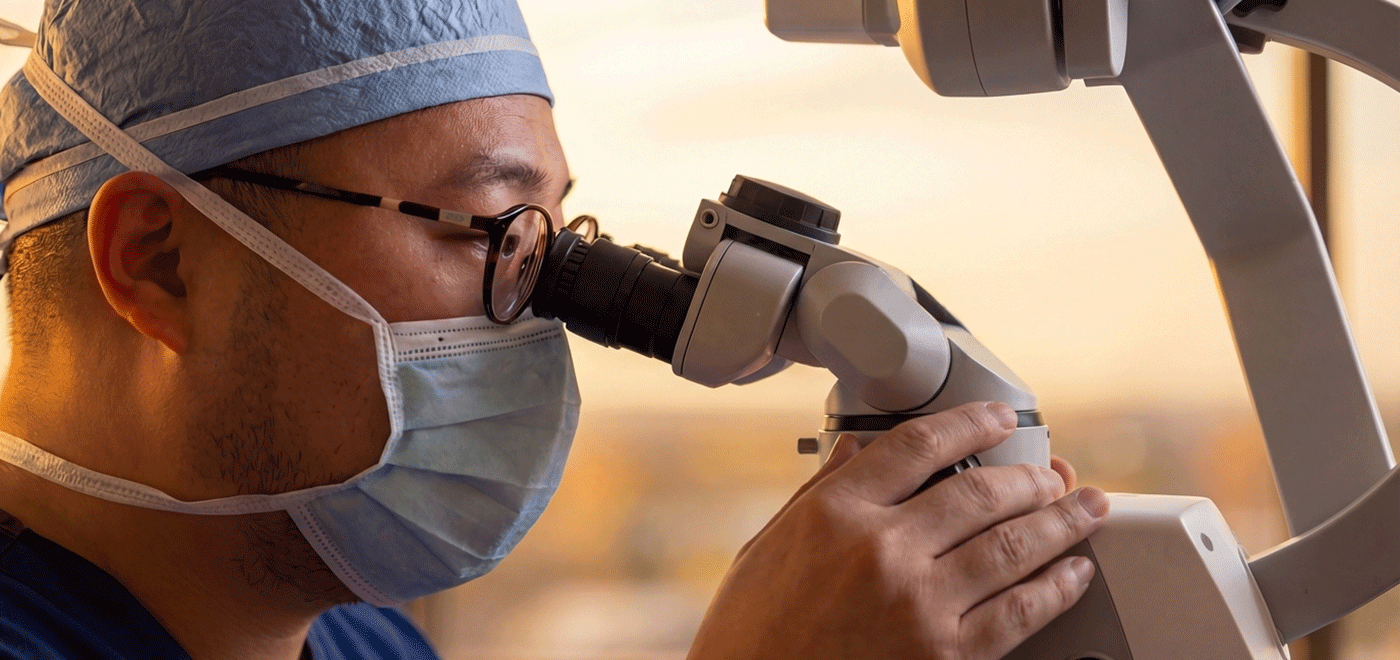
Lymphaticovenous Anastomosis overview
Lymphaticovenous anastomosis (LVA) is a type of supermicrosurgery that joins working lymphatic vessels to nearby small veins. These joins create new drainage routes so lymph fluid can leave the swollen area and re-enter the bloodstream.
LVA aims to reduce swelling, soften heavy or tight tissues, and lower the risk of infections such as cellulitis. It works best as part of a wider plan that includes good compression, skincare, weight management, and support from your lymphoedema team.
At a Glance
- Aim: Support lymph drainage by joining lymphatic vessels to small veins.
- Best suited to: Early to moderate lymphoedema where ICG lymphography shows usable lymphatic channels.
- Anaesthesia: Often a general anaesthetic; sometimes regional anaesthesia or local anaesthesia with sedation.
- Stay: Typically day case; occasionally one night for observation.
- Scars: One or more small incisions, locations are based on the findings from your ICG lymphography, usually a few centimetres long.
- Results: Some people notice changes within weeks; others improve more slowly over several months. Results vary between individuals.
About LVA
01How does LVA work?
In lymphoedema, some lymphatic vessels become blocked or damaged, so fluid builds up in the tissues. LVA creates a small “bypass” by joining a functioning lymphatic vessel directly to a small vein. This route allows lymph fluid to drain into the venous system instead of pooling in the limb.
Each join only affects a small territory. The overall effect depends on:
- The number and quality of usable lymphatic vessels.
- How advanced the lymphoedema is.
- How well surgery fits with your compression, exercise, and skincare
LVA does not replace conservative treatment. It works alongside compression and self-care rather than instead of them.
02Who might LVA help?
LVA may suit you if:
- You have early to moderate lymphoedema.
- ICG lymphography shows working lymphatic channels that still carry dye forward, even if they do so slowly.
- Your swelling feels soft or only partly firm, or you still have some “pitting” when you press the skin.
- You have symptoms such as heaviness, tightness, aching, or recurrent cellulitis that affect your comfort, function, or quality of life.
- You can continue with compression and skincare after surgery.
We use ICG lymphography, your examination, and your personal goals to judge whether LVA is likely to help and how it might fit into a wider plan.
03Why planning LVA carefully matters
Lymphaticovenous anastomosis (LVA) works best when each bypass drains a meaningful part of the limb. If planning focuses only on the easiest vessels to see on the scan, several bypasses may end up serving the same small area, often near the hand or foot. Central swelling can then persist, and the overall effect on the limb remains limited. When planning does not consider how the whole limb drains, the benefit from surgery may be smaller than expected
04How we plan LVA
We use a physiology-led approach based on your ICG lymphography and examination rather than a one-size-fits-all pattern. We plan at the level of lymphatic drainage territories, sometimes called lymphosomes, rather than only at the point a vessel first becomes visible on the scan.
In practice, this means that we:
- Use multi-phase ICG lymphography to see how different regions drain and where flow slows or backflows.
- Target ‘stressed but working’ vessels that offer a good balance between technical feasibility and likely benefit.
- Plan incisions so each LVA supports a meaningful drainage territory (lymphosome) and avoid concentrating all joins in one small zone.
- We avoid poor-quality tissues such as heavily irradiated or scarred areas where possible.
This planning strategy does not guarantee a particular outcome, but it aims to give each bypass the best chance to make a useful difference while keeping the number of scars and the overall surgical burden as low as we reasonably can.
05Why specialist training matters
LVA involves working under high magnification on vessels typically smaller than 0.8 mm, using supermicrosurgical techniques and sutures finer than a human hair. The surgery itself is only one part of the treatment.
Good results depend on the combination of:
- Accurate interpretation of ICG lymphography findings with clinical assessment.
- Identifying suitable, high-quality lymphatic vessels and recipient veins.
- Creating watertight, low-tension anastomoses in appropriate sites.
Surgeons who perform LVA regularly and who have specific training in lymphatic supermicrosurgery gain experience in all of these steps. That experience matters because it influences:
- Which operation you receive. In some situations, LVA helps on its own; in others, it works best alongside or in a staged plan with other treatments.
- Where to operate. Reading the scan correctly and understanding how the limb drains helps the surgeon choose incisions in areas where a bypass is most likely to move fluid.
- What happens afterwards. A surgeon who works closely with lymphoedema therapists can align surgery with appropriate advice on garments, bandaging, and long-term care.
At the Great North Lymphatic Centre, your surgeon has dedicated fellowship training in lymphatic supermicrosurgery and reconstructive microsurgery in high-volume units. That training underpins how we select procedures, plan your operation, and support you after surgery.
06Benefits and limits
Potential benefits
LVA aims to support lymph drainage and reduce the burden of lymphoedema. For suitable patients, it may:
- Reduce limb swelling and volume.
- Soften and lighten the limb, with less tightness and heaviness.
- Lower the risk and frequency of cellulitis.
- Improve compression garment fit and comfort.
- Help everyday function, work, and travel feel more manageable.
- Offer a small-incision, minimal access surgical option.
We base LVA on your scan findings and drainage pattern, so your plan remains physiology-led and tailored rather than one-size-fits-all.
Limits
LVA helps many patients but does not cure lymphoedema:
- Outcomes differ between people. Your pattern of disease, vessel and vein quality, compression, and self-care all influence how well LVA surgery works.
- LVA does not suit every case. Depending on ICG lymphography findings we may recommend alternative treatment instead, or as well.
- You will still need compression, skincare, and self-management; LVA supports these but does not replace them.
- Some people notice only modest or gradual change. If improvement feels small, we will review your results with you and discuss whether any further steps may help.
What to expect
01On the day of surgery
Most of the practical steps on the day of surgery are the same for all procedures. These are described on our Patient Information page under “On the day of your surgery”.
In theatre, we often repeat ICG lymphography (usually once you are anaesthetised) to finalise LVA sites. Surgery length varies with the number and complexity of joins. Many cases last a few hours. You then recover on the ward. Most people go home the same day; some stay one night for observation.
02After surgery
You may feel some discomfort or tightness around the incision sites for a few days. Simple pain relief usually controls this well.
- We usually use dissolving stitches; if we use removable stitches we explain when and where to remove them.
- You keep wounds clean and dry until they heal.
- We advise when to restart or adjust compression garments.
- We give you clear contact details if you notice increasing pain, redness, discharge, or a new unpleasant smell.
LVA works with compression rather than instead of it. You would be advised on the most appropriate adjustable compression garment before surgery. Compression normally restarts soon after surgery, with adjustments as limb volume changes.
03Follow-up, timelines and risks
We usually see you for an initial wound and garment review with regular further visits to review symptoms, limb measurements, and wider management plan.
LVA surgery is considered a minimal access and low-risk procedure, but it still carries the usual risks of surgery and anaesthesia: bleeding, infection, delayed wound healing, blood clots and small scars or changes in skin sensation. There is also a risk that some or all of the connections do not provide the level of improvement we hope for, even when surgery goes technically well.
We discuss how these risks apply to you, and any additional procedure-specific risks, in detail during your consultation.
Common questions
01How long does LVA surgery take, and how long do I stay in the hospital?
LVA involves fine work on very small vessels under a surgical microscope. Surgery often takes several hours, especially when we perform several anastomoses. Many people go home the same day. Occasionally, we recommend one night in hospital for observation.
02When will I know if LVA has helped?
Some people notice changes in tissue softness or symptoms within days to weeks. For others, changes appear more gradually over several months as tissues adapt and garments are adjusted. We usually assess early progress at your first follow-up visit and review longer-term change over time. Where tissue fibrosis has developed, improvement may be limited to the fluid swelling only. We review progress at follow-up and adjust your management plan as needed.
03Will I still need compression after LVA?
Yes. LVA supports lymph drainage but does not replace compression. Over time, if limb volume reduces and becomes more stable, you may move to lighter garments or a simpler regimen with increased flexibility with compression-free periods without immediate return of swelling. This increased independence would help plan your life around specific key events where compression may not be desirable or practical. Many people still need some form of compression as part of long-term lymphoedema care.
04When can I work, drive and travel after LVA?
You can usually move the limb gently from day one and gradually build up as you improve. Many people return to their most usual day-to-day activities by 3–4 weeks.
Return to work depends on which limb we operate on, the number and position of incisions, and the type of work you do. Many people with desk-based roles return within one to two weeks. Jobs that involve heavy manual work or high infection risk may need a longer break.
You can usually drive again when you can perform an emergency stop safely, feel comfortable moving the limb, and do not take strong painkillers that affect alertness.
We encourage gentle movement soon after surgery, while you avoid heavy lifting, high-impact exercise, or direct pressure over the scars until they settle. We tailor this advice to your situation.
05Can I travel soon after LVA surgery?
Short local journeys are often safe once you feel steady on your feet and comfortable with pain control. For longer trips, especially flights, we usually recommend a delay. We would give you specific advice on timing, compression, movement, and hydration before you travel. If you plan major travel around the time of surgery, please tell us so that we can factor this into your plan.
06Will I need further surgery after LVA?
Sometimes. Many people have a mixed pattern of lymphatic disease. LVA may be one part of a wider plan that includes ongoing conservative care, liposuction, or, in selected cases, VLNT. We only suggest further or staged procedures when they are likely to help and when they match your goals.
Next steps
To discuss your suitability for lymphoedema surgery, contact our team. We will review your history, current treatment and goals, and advise on the most appropriate next steps at our luxury medical centre at The Beverley in Gateshead.
Complete our contact form to discuss your suitability for lymphoedema surgery.