
A general guide of what to expect
Deciding on surgery for lymphoedema can feel like a major step. Many people who come to us have lived with lymphoedema for some time and have already done careful research.
This page gives a general guide to what to expect before and after lymphoedema surgery at the Great North Lymphatic Centre. It aims to help you prepare, understand likely timelines, and know when to ask for help. It does not replace individual advice from your consultant. Your own plan may differ depending on your health, the area treated, and the type of operation.
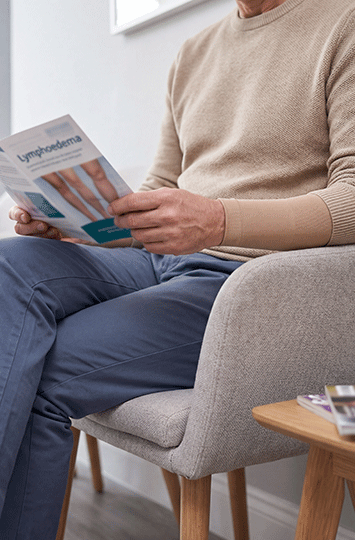
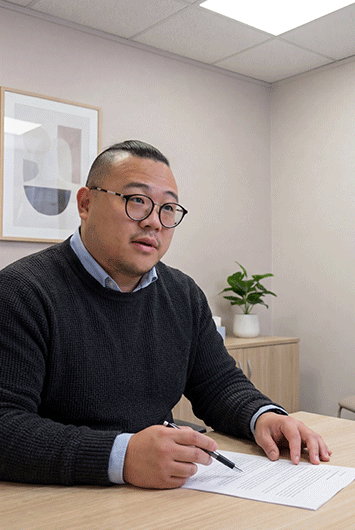
Before your consultation
01Appointment length and who to bring
If you attend a face-to-face appointment, please allow up to two hours for your first visit. You are welcome to bring a family member, friend, or carer if that helps you.
For virtual appointments, please allow up to 45 minutes.
02What to bring
- Any referral letter, clinic letters, scan reports (if you have them).
- A list of medicines and allergies.
- Your current compression garments.
- Details of any cellulitis episodes or antibiotic treatments.
- A short summary of any complex medical conditions or long-term medication.
03What to think about in advance
It can help to note down:
- How long you have had swelling and how has it changed over time.
- How lymphoedema affects your daily activities, work, clothing, and sleep.
- Any specific goals that matter most to you (for example, fewer infections, easier travel, better limb size, or garment fit).
- Any questions or concerns about lymphoedema treatment or surgery.
04What happens at your consultation
You will see one of our specialist consultant surgeons for a detailed assessment and examination. We assess the severity of your lymphoedema and your suitability for surgical treatments. A first consultation by video can work well if you prefer.
If appropriate, we may advise indocyanine green (ICG) lymphography or other investigations as part of your assessment. Sometimes we can arrange this on the same day; in other cases it is booked separately.
We will explain:
- Why we recommend ICG lymphography or other imaging.
- What the test involves.
- How the results are likely to influence your treatment plan.
After assessment, we will:
- Confirm whether lymphoedema is present and which areas are affected.
- Explain your current stage of disease as clearly as possible.
- Discuss the role of conservative care, including compression and lymphoedema therapy.
- Outline whether options such as LVA, VLNT, liposuction, or debulking may be suitable.
We will explain likely benefits and limits of each option, suggest a plan, and give you time to consider your choices and ask questions. You do not need to decide on surgery on the day.
If you decide to proceed with surgery, we will:
- Confirm which operation we recommend, and which area will be treated.
- Check your general health and arrange any pre-assessment tests that the hospital requires.
- Discuss medicines that may need to be stopped or changed before surgery (for example, blood thinners).
- Explain expected hospital stay, time off work, and support you may need at home.
You will receive written information about your planned procedure and have a cooling-off period. The individual treatment pages on this website (LVA, VLNT, liposuction and debulking) give additional detail about each operation.
On the day of your surgery and after
01Arrival and preparation
Please arrive at the time stated in your admission letter. You may be asked to stop eating and drinking for a set period before surgery; we will give you specific instructions in advance.
On the day:
- A nurse or ward team member will welcome you and check your details.
- Your consultant will review the plan, answer last-minute questions, and mark the limb or area to be treated.
- An anaesthetist will see you to discuss the anaesthetic and pain control.
If we feel that additional imaging or checks are needed on the day, we will explain this and seek your agreement. If anything is unclear, please contact us so that we can clarify before the day.
02Going to theatre and after your operation
When it is time for surgery, the theatre staff will escort you to the operating area. After the procedure, you will recover under observation in a recovery area before returning to the ward. We will manage pain relief, check your dressings and agree the first steps for compression and movement.
The length of stay varies by procedure and by individual. Typical ranges are described on each treatment page. Before discharge, we provide a written summary, prescriptions if required, red-flag advice and contact details. If you have concerns at any stage, please tell us.
03Dressings and showering
Dressings are usually shower-resistant. Many people can shower the day after surgery unless we advise otherwise. We generally use absorbable stitches. If we use non-absorbable stitches, we typically remove them at around two weeks.
04Pain and medicines
Some discomfort is normal after surgery, but it should gradually improve.
- You will receive pain relief in hospital and a plan for tablets to take at home.
- We will advise how and when to reduce stronger medicines.
- If pain worsens suddenly, or you feel unwell, you should contact us or follow the emergency instructions given at discharge.
05Compression and skincare
Compression usually restarts on a planned schedule. The type and timing depend on your operation and your healing. You may expect to begin with lighter compression and progress to full compression once it is safe.
We would confirm which garments to use, how long to wear them each day, and when to review the fit. If compression causes pain, numbness, or colour change, contact us.
06Activities, driving, and work
Most people can resume light activity soon after surgery. As a general rule, light movement is usually encouraged early to reduce stiffness and clot risk, but you will need to avoid strain on the operated area.
- In the first one to two weeks, focus on wound care and pain control, with short, gentle walks close to home and limb elevation when you rest.
- Avoid heavy lifting, high-impact exercise, and long periods of standing or sitting without a break until we advise otherwise.
- You may drive when you can perform an emergency stop safely, can control the vehicle without pain, and are no longer taking sedating painkillers.
- Return to work depends on the type of surgery and your role. We will discuss estimated timelines with you and can provide fit notes.
07Follow-up and monitoring
We normally arrange:
- An early wound review, usually within the first one to two weeks.
- Further follow-up appointments to assess healing, comfort, limb size, and any infections.
- Adjustments to your compression and self-care plan.
In some cases, we may recommend repeat measurements, photographs, or further imaging to monitor your progress. If we feel that additional or staged surgery may help, we will discuss this with you and agree next steps together.
General common questions
01Will I still need compression after surgery?
Usually yes, especially in the early stages. Lymphoedema surgery supports your lymphatic system; it does not cure lymphoedema. Compression, skincare, movement, and infection prevention remain important in the long term, although the exact regimen may change over time. For procedure-specific timelines, see the relevant section on the specific treatment page.
02How long before I notice a change?
Improvement usually builds gradually. Some people notice softer tissues or improved comfort in the early weeks. Changes in limb size, garment fit or infection pattern often take longer and vary between individuals and between procedures. Each procedure page explains typical timelines for that operation.
03Can I travel soon after surgery?
Short local journeys are often possible once pain settles and you feel steady on your feet. Longer journeys, especially flights and long car journeys, need more planning. We will give you specific advice on timings, compression, movement and hydration before you travel. Always tell us about any planned long-haul travel when we schedule your surgery.
04Will I need further surgery?
Sometimes. Lymphoedema treatment often works best as a programme rather than a single event. In some situations, more than one procedure can have a role and may be offered in sequence or combination with conservative care. We only suggest further surgery when we believe the potential benefits outweigh the risks in your situation.
05How do I contact the team after I go home?
Before you leave hospital, we will give you:
- Contact details for the team during working hours.
- Clear advice on when to seek urgent help, including warning signs such as spreading redness, fever, sudden swelling, or breathing problems.
If you feel worried after surgery, contact us early so we can advise and review you if needed.
06How do funding and payment work?
Your care pathway always starts with a clinical assessment and an agreed treatment plan. Many people in the UK access lymphoedema surgery as self-funded care. Some people explore whether their private medical insurer may contribute to costs, but policies differ in how they cover lymphoedema surgery.
After your consultation, we can provide a clear summary of the recommended plan and the clinical reasoning behind it. You can use this when considering your own arrangements, or if you wish to discuss funding options with the hospital or your insurer.
Next steps
To discuss your suitability for lymphoedema surgery, contact our team. We will review your history, current treatment and goals, and advise on the most appropriate next steps at our luxury medical centre at The Beverley in Gateshead.
Complete our contact form to discuss your suitability for lymphoedema surgery.